FME and JUPROA Establish Partnership to Advance Climate Resilience in the Bolivian Amazon

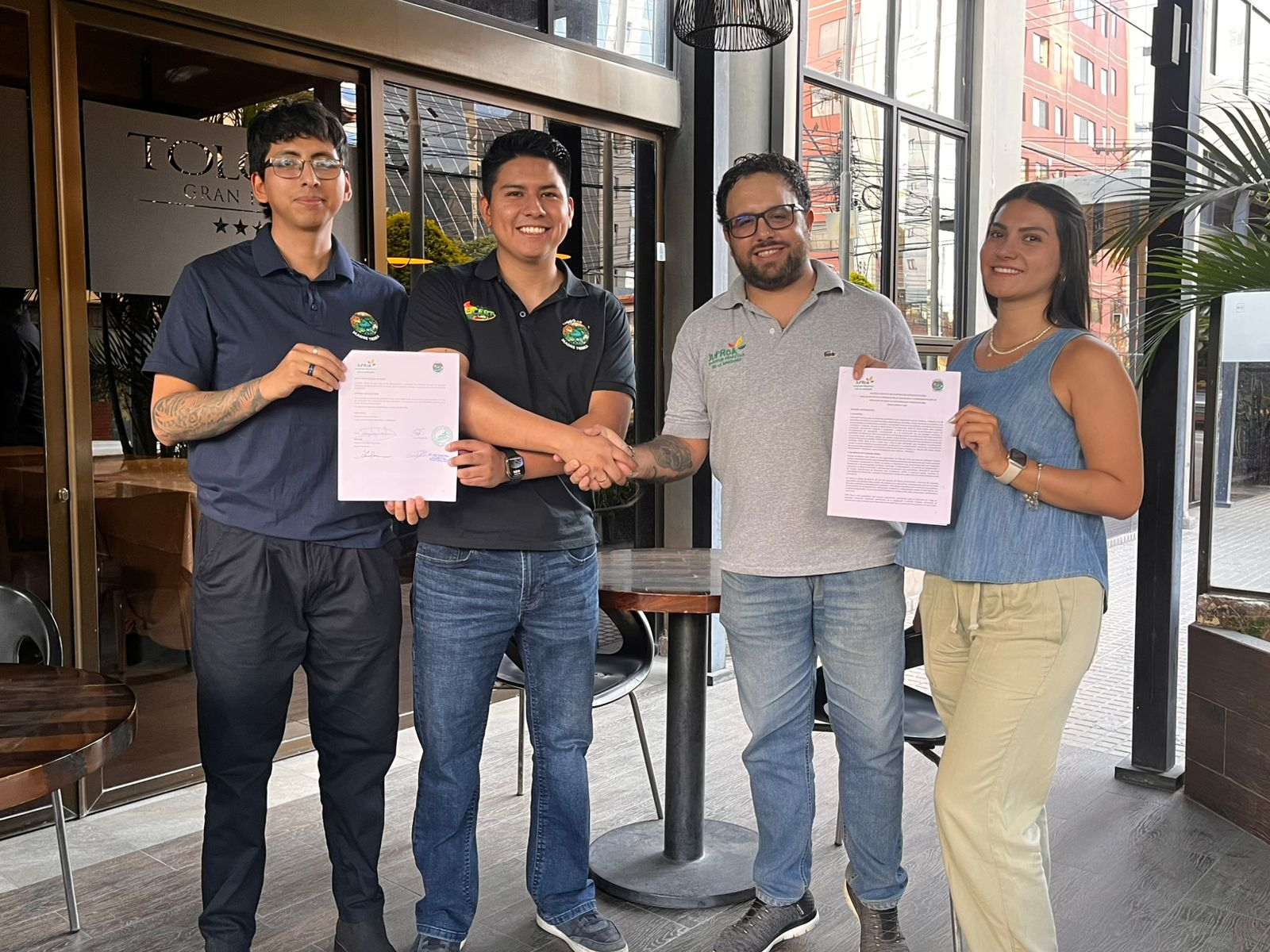
Friends of Mother Earth (FME) and Proactive Youth for the Amazon (JUPROA) have entered into a two-year inter-institutional cooperation agreement to support sustainability, livelihoods, and climate resilience initiatives in Bolivia’s Amazon region.

The partnership brings together JUPROA’s strong local presence, youth leadership, and community networks with FME’s technical experience in climate resilience, disaster preparedness, environmental protection, and project development.

Initial activities will focus on the department of Pando, with the potential to expand collaboration to Beni, La Paz, and Santa Cruz. Together, the organizations will work to identify funding opportunities, develop joint projects, and support vulnerable populations, including youth, women, Indigenous communities, and rural families.

This alliance reflects a shared commitment to strengthening local leadership, protecting ecosystems, and building sustainable livelihoods in the Bolivian Amazon.

Through cooperation, community engagement, and locally grounded action, FME and JUPROA aim to help advance a more resilient and sustainable future for the people and ecosystems of Bolivia.

The Ecological Economy, Biomímesis, and the Prevention of Fires

photos of speakers

‘The Ecological Economy, Biomímesis, and the Prevention of Fires’ was the title of a presentation given by Christian Stalberg at the International Seminar on Fires hosted by the Agro-Environmental Court of Bolivia held in Santa Cruz, Bolivia on November 21, 2025.

Stalberg’s presentation explained how ecological economics, biomimicry, and fire prevention can jointly protect forests in the Santa Cruz Chiquitanía while supporting sustainable livelihoods. Ecological economics promotes income based on regenerative, forest-friendly activities such as agroforestry, non-timber forest products, and localized circular economies that reduce the need for deforestation. Biomimicry offers design strategies inspired by rainforest systems—including multilayer agroforestry, natural moisture retention, and fire-resistant landscape patterns. Fire prevention combines community-led brigades, Indigenous knowledge, fuel-load reduction, and improved land-use planning to stop fires before they start. Together, these three approaches reinforce one another, creating resilient ecosystems, sustainable livelihoods, and safer communities.